
What Kenyan Students Get Wrong When Applying to U.S. Universities
By USAPP, Raydon Muregi
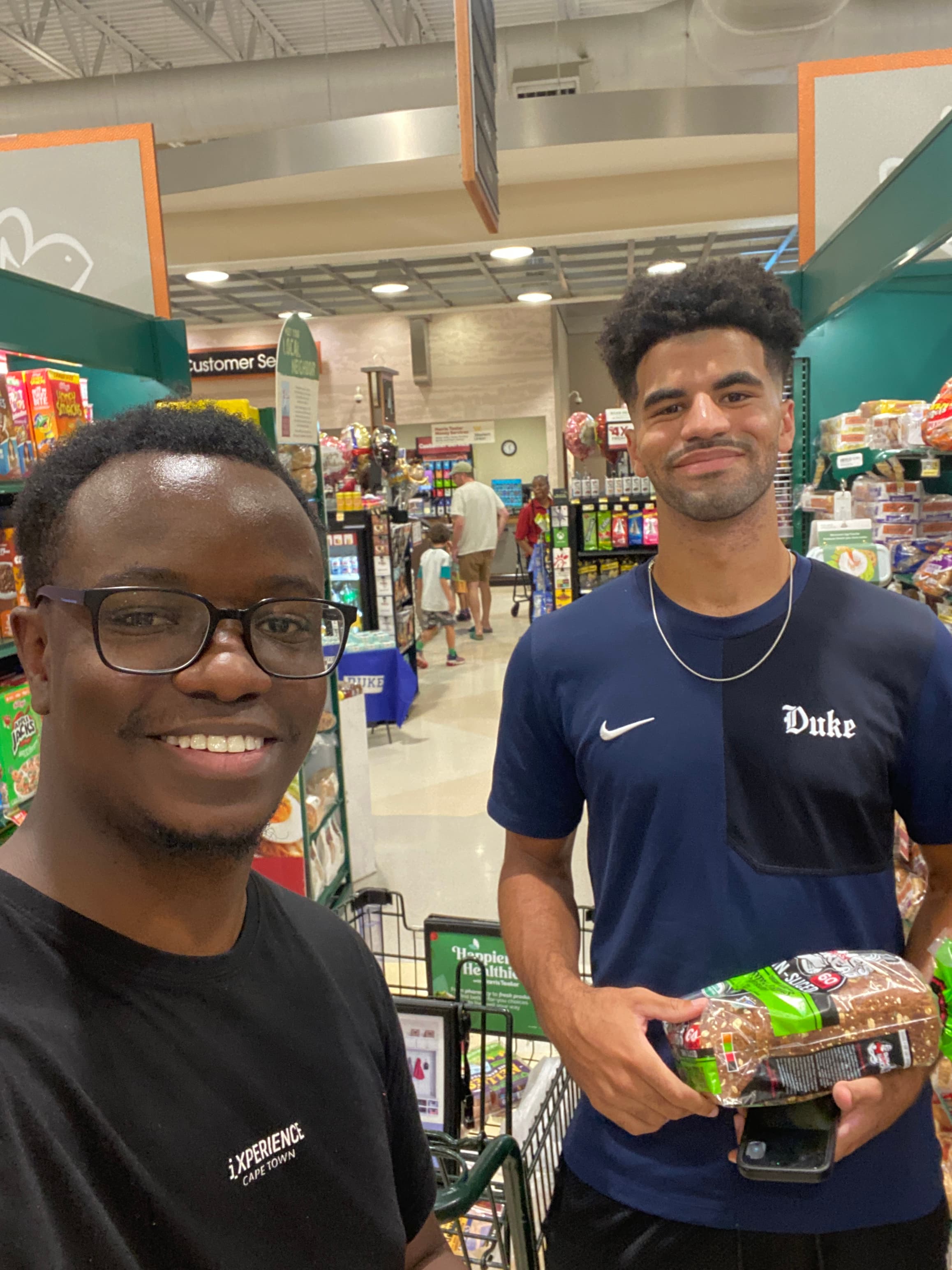
I'm a senior at Duke now, but four years ago I was exactly where a lot of you are: trying to figure out what actually gets a Kenyan student into a school like Duke, Harvard, or MIT. Since then I've spent a lot of that time mentoring other students through the same process, and I keep seeing the same two mistakes over and over.
Mistake #1: Treating academic prowess as your main strategy
A lot of students believe that showcasing their academic might, their grades, their competition wins, is the golden ticket into a school like this. And to be clear, the accolades help. I'm not saying don't win the competitions or chase the trophies. But you can't walk into the application process treating "look how shiny my achievements are" as your main strategy. American university culture, in my experience, doesn't reward showboating. It doesn't reward positioning yourself as simply the best student in the room.
Mistake #2: Trying to prove you're better than every other applicant
This is related but distinct. It's the mindset that says: if I don't list enough wins, if I wasn't in the exclusive club, if I don't show I'm sharper than the next applicant, I'm done for. Most students I've worked with fall into this trap. They pour everything into proving they thrive academically, that they perform well under pressure, that they're at the top of the pack. And honestly, it doesn't work as well as they think it will.
So what actually works?
There's no secret formula you can follow to the letter and guarantee a result. But there are some canonical approaches, especially if you're applying to schools with competitive financial aid.
The biggest one: show the so what. Plenty of students are excellent at physics. Far fewer explain why physics matters to them, what personal story pulled them toward it, what lengths they went to in order to master it, what actually excites them about the subject. Most applicants talk about being first in biology, about being praised by their teachers. Almost none talk about the personal story that sparked the interest in the first place, whether that's physics, or government and civil engagement, or anything else.
Personality is the hard part
Personality is difficult to judge because every reader responds to it differently. But if you go in knowing your personality needs to come through, it changes how you approach your essays. The thing that makes personality land on the page is showing your personal connection to the problem, the innovation, or the academic journey you're writing about.
This is where students forget something important: the different intersectionalities that have shaped how you see the world. I mean things like your racial background, your economic mobility, what home looks like for you, the things you genuinely enjoy doing, your talents, the quirky details about you that won't show up in every other application on the pile. Those are the things worth writing toward.
None of this means the strongest applications avoid talking about real achievements. They just approach them from a different angle.
Take a student who won a prestigious science competition. The weak version of that essay jumps straight into the late nights, the early mornings, the grind to win. The stronger version roots it in something more personal, a love of learning for its own sake that came from family values, or a pull away from the mundane experience of solving problems without ever understanding why, or the discovery, outside of anything tested in school, of a subject worth exploring purely out of curiosity. That competition becomes the byproduct of that exploration, not the point of the story.
Or take a student who was simply "the strong biology student" who won everything. Instead of leading with the wins, the stronger essay might trace back to something specific and personal, like losing their voice for a week and, in that experience, developing a genuine appreciation for how the body works, how medicine gets made, how vocal cords function, maybe even a new appreciation for their own singing. And then following that thread somewhere real: volunteering, sharing that story, and sharing the sense of discovery behind it with other people.
That's the shift. Not "look what I won," but "here's what I noticed about myself and the world, and here's what I did with it."
If you got this far, you are probably considering starting your own journey. Start here today. Apply to our next cohort on this link: https://www.usaprospectsprogram.com/apply
Ready to take the next step?
Apply